Tuesday, September 10, 2013

culture shock. or not

True confession: This is my French toilet. It is not
 in a gas station. Alas, I had no American ones
on hand for illustration. Who takes
pictures of toilets?
It was a gas station bathroom. One not remarkable in any way except that it was relievingly clean, as "les toilettes" at the big trucker-targeting interstate-highway gas station complexes tend to be--cleaner, at least, than the kind around back that must be entered with keys attached to three-foot-long boards marked "Women" in black magic marker. I was making my first little solo road trip in months, maybe a year, even, and enjoying the chance to be alone in a car on the open road during a summer trip back to the U.S.

The bathroom was small-ish as such bathrooms go, with only about three stalls. I exited to the sink ahead of the other woman who had entered the bathroom. But she had reached the hand-washing stage of things beside me by the time I was waving my hands under the magic sensor to acquire a paper towel. What emerged surprised me: only about three inches of stingy dispensing. As I waved a second time, so I could dry my other hand, she was receiving her first ration.

And then suddenly I realized I could comment aloud about the slightly comical allotment. So I did. She smiled and agreed that these were the smallest paper towels in the world (or maybe it was something slightly less hyperbolic but just as friendly).

And it was in that little highway bathroom somewhere in Tennessee that I realized how the past year, and especially the six months since my two-week run State-side for Christmas, had retrained me: I've stopped talking to strangers.

My brain still doesn't work fast enough in French to succeed well in those spontaneous life moments in which two unknown-to-each-other people exchange their humanity for a few seconds. And outside of France--say, in the realm of international flights--I now wonder how you can ever know which language to try first when speaking to someone you don't know. Really, you can't tell by looking at most people what language they speak. And with one and 1/4 languages now at my disposal, I'm paralyzed by the possibility of choice.

This thing that in my former life had always been a certainty--speak in English and they will understand--is no longer certain. As though I've eaten from the tree of the knowledge of good and evil, my new knowledge has left me tongue-tied. The world is no longer simple and innocent.

I hadn't realized how silent I've become until I was confronted by it in that truck-stop loo. It was strange and sobering and exciting all at once to discover how my new cultural milieu has changed me. I tend to dance between cultures quite easily, feeling at home in lots of places in this world. This is mostly a gift, though sometimes being a chameleon leaves you wondering who you really are.

So when others talk about culture shock, I can barely relate. I enter new places excited to discover how they are different and how they are similar to all the other places I know. I enter eager to understand how people transact life there, eager to interact with them on their terms. Perhaps it's that lens of wonder that keeps me from being too rattled by all that's new and different. I don't expect it to be the same. I want it to be different. I want the world's cultures to keep their endearing and sometimes-maddening quirks.

But this is the longest I've lived outside the States, so I have wondered if this culture shock thing would rear its ugly head in time to celebrate my one-year anniversary of life abroad. I expect I'll discover other effects, but for now I've just stopped talking to strangers. I suppose that's not so bad as the list of potential shocking maladies goes. And I have hope that this skill isn't lost forever. So watch out, strangers of the world, my French is improving. One day I'll learn how to say, "That's the shortest paper towel I've ever seen!"

haiku-ing


Imperceptible

sun sanctuary
withers into mud unafraid
holy season change


Monday, September 9, 2013

on the importance of travel

Carthage ruins, Tunisia

At the end of August, I made my first foray into North Africa, something I've been wanting to do since arriving in southern France last year and making North Africa my neighbor. Upon setting foot in Tunis, I quickly found myself falling at least half in love with Tunisia from the word go.

I hadn't been sure what to expect given the Middle Eastern/North African security warnings dominating the airways in the weeks leading up to my hop across the Mediterranean. But our Tunisian travels went off without a hitch.

Tunisia felt partly familiar and partly exotic. It was this beautiful mélange of other places I've visited or lived in and loved: India, sub-Saharan Africa, France. Yet, it had its own spice. And who's not attracted to someone who's comfortable to be around but keeps things interesting with a little fire and spirit?

By all Instagram appearances, my trip across the sea was a fun vacation. In this case, appearances are only partly correct. In reality, any travel I do is also work. But, hey, work can be fun! You see, given the line of work I'm in and the vision I have for the stories I want to tell more of, every exposure to new cultures and places is extremely valuable, whether I'm there to tell an already-assigned story or not.

I've written more articles related to Haiti and interviewed more Haitians from the U.S. than I did during my month in Haiti in 2008. But because of having spent that month in Haiti, I had a better context for everything my Haitian interviewees said to me in those later interviews. I understood their world more than I would have if I had never been to Haiti. Before I interviewed them across telephone wires, I had been in their home country, ridden in tap-taps, eaten Haitian food, and enjoyed the vibrancy of their culture. This allowed me to connect with them better, drawing out their trust. It allowed me to ask better questions. It allowed me to understand their answers through a lens that wasn't only American.

When I was in Kenya in 2007, I wrote on my blog about my visit to one of the slums outside Nairobi. I had been in Africa for 4 or 5 weeks at that point, and I had been listening attentively to everything I could in order to understand accurately what I observed. Yet, I still got something wrong. It's just a short little sentence in the middle of a blog post, and it's not even actually factually wrong. But the way I used that sentence painted an inaccurate picture, though I didn't know that until a long time later.

The offending sentence is this one: "Several of the children and babies weren't wearing underwear or diapers." I wrote it in a paragraph illustrating the needs in the slum and at a particular orphanage. A while later, well after returning to the U.S., after the images from these travels and others had had time to roll around in my brain for a while, a question emerged.

What if the reason those little kids weren't wearing underwear or diapers had nothing to do with poverty?

I ranged back over the images archived in my head. And maybe some recorded in pixels too. I began to realize that it was mostly the littlest kids running around with uncovered bottoms. The older kids usually had some sort of clothing.

I'm not sure what connected the dots for me, but I finally asked a friend who came from one of Africa's countries about it, to check out my hunch: Were those kids diaper- and underwear-less because they were still potty training? And in a community where most of life happens outdoors, it makes way more sense to let the three-year-olds run around free to go when the need hits? (How many American three-year-olds wouldn't love the same freedom?)

My hunch was confirmed. But you see, I didn't ask the question back when I wrote that blog post, because it never crossed my mind that there was any possible interpretation other than the fact that no one had money to get clothes for these poor kids.

I thought I understood, so I didn't ask.

A story is normally only as good as the questions one asks before writing it. And this is why I need to travel and learn as much as I can. Because it was traveling and observing and putting two and two together that finally prompted the question and corrected my impressions.

I'll never be able to rid my stories of all such errors, but my goal is to keep chipping away at my own and others' incorrect impressions. I want to keep being confronted by questions I never thought to ask before.

Thus, I need to travel as often and as much as I can, for the sake of the stories I will write. Work and rest are nearly inseparable in a writer's life. Any experience is fair game for one day being written up. Most of the time, that's perfectly fine. Working didn't make my Tunisian vacation any less fun. :-)

Sunday, September 8, 2013

oh, metric system, how I try to love thee

I can now admit that I was a bit smug a year ago when I packed to move to France, for what I then thought would be just one year. I was a little proud of myself for being world-wise and think-ahead enough to know it might be difficult to find my kind of measuring cups in France. You know, the kind that actually measure things by cups or portions thereof.

With my American recipes in hand, I was going to need some 1/4 cups and 2/3 cups of lovely ingredients from the local French produce markets. What a beautiful marriage it would be between U.S. standard units and metric-world items.

And so I and my measuring cups arrived to conquer France (only in a manner of speaking, mind you, and that manner is not a literal one). As I cooked my way through this part of the world last year ("cooked" is also used loosely here), I found myself regularly googling various conversion units and engaging in mathematics gymnastics every other meal. You don't want to know how many calculations it takes to make a bowl of oatmeal when you purchase the oatmeal in France where my 1/2 cup measures are nowhere to be found in the cooking directions. Determining how many grams of oats go with how many milliliters of water is the stuff of nightmares, even for those of us who actually like math. (Not to mention the fact that what that box refers to as a serving size is barely enough for a beetle to live on.)

Upon my return to lovely southern France a couple weeks ago after a six-week summer séjour (as the French would say) State-side, I'm taking some little steps to commit here. I'll be here at least another year, maybe longer (anything's possible!), and I don't want to live here transitionally for the next 20 years because I only sign up one year at a time.

Thus, came the idea of all ideas. The one that was destined to make the world a much better place. Or at least my world. The realization exploded in my brain--a brain made more agile by all those real life math problems I did last year, I bet--that I could actually go buy a milliliters measuring device! Such kitchen gadgets really aren't reserved only for those who grew up metric. In fact, when I crept into the kitchen shop--no need to draw attention to the act of treason that was about to go down--no one even asked to see my French residence permit before accepting my money. Amazing!

So watch out world. Looks like I'm really living in France now!

And don't worry, I will continue to get plenty of real life, brain-exercising mathematics application moments every time I buy anything, courtesy of earning money in dollars and spending them (painfully) in euros--euros that I'm very happy aren't pounds, the money kind or the weight kind.

Saturday, September 7, 2013

French matchmakers

[Don't lose heart! This equal opportunity post appears below in English. Brought to you by new language learners everywhere.]

~~Un jour au marché~~

Aujourd'hui au marché les fraises m'ont appellé avec leur beauté rouge. Donc j'ai arreté en face d'elles et j'ai attendu le vendeur.

"C'est deux barquettes pour 5 euros," a dit-il. Pour une barquette c'était 3 euros, selon le signe sur la table.

"Juste une," j'ai répondu. "Je ne peux pas manger deux parce que je suis seule."

"Vous êtes seule?" Ses yeux se sont éclairés. "Mon frère est seule. Voulez-vous me l'appeller?" Il a fait le signe universel pour le téléphone avec son pouce et le petit doigt proche son oreille.

J'ai souri. C'était drôle. 

J'ai fini mon achat.

Et puis l'homme m'a dit encore. "J'appelle mon frère?" Il était sérieux. 

"Non, merci," j'ai répondu. Pendant que je suis partie, j'ai imaginé la conversation: "Boujour, monsieur. Voulez-vous manger des fraises avec moi?"

C'est un vendeur astucieux: pour vendre plus de fraises, il vend son frère aussi.


~~One day at the market~~

Today at the market the strawberries called to me with their red beauty. So I stopped in front of them and waited for the vendor.

"It is two cartons for 5 euros," he told me. One carton was 3 euros, according to the sign on the table.

"Just one," I replied. "I can't eat two because it's just me."

"You are alone?" His eyes brightened. "My brother is single. Do you want me to call him?" He made the universal sign for a telephone call with his thumb and pinky near his ear. 

I smiled. It was funny. 

I finished my purchase. 

And then the man said again to me. "I call my brother?" He was serious.

"No, thank you," I replied. While I walked away, I imagined the conversation: "Hello, sir. Would you like to eat some strawberries with me?"

This salesman is quite shrewd: to sell more strawberries, he also sells his brother.

Friday, August 23, 2013

in which a kind stranger saves (me from) the night


Pre-adventure question of the evening:
Is gazpacho meant to be drunk or spooned?
The sign at the railroad tracks said, "Danger de mort." Danger of death seemed a little stronger than "don't cross the tracks," as we had been told the sign would say. We had also been told to cross the tracks anyway, after walking down the dark road nestled in the midst of pine trees. As we paused before crossing, after determining that this was indeed the path we had been told to follow, I quipped, “Maybe this is our first travel adventure.” I later decided I’d spoken too soon. I meant to be only joking.

No death was in sight, so we stepped across to the barely distinguishable path on the other side that appeared aimed at the road we could see below. Brooke and Brad were only intending to walk me to the bus stop so I could return home to Aix-en-Provence’s centre ville while they remained behind to recover from their cross-Atlantic flight in the closest hotel they could find to Aix in the midst of France’s vacation month. Thus, the footwear Brooke wore to dinner at the hotel didn’t rank very high on the adventure footwear meter, and she could count the stones through her thin, treadless soles as we tried to avoid sliding down the carpet of loose rocks.

We reached the road, spotted the designated round-about to our right, and as we approached it, finally saw a covered bus stop shelter. Great. Everything’s going according to plan.

We walked closer. Bus #4 was featured along with several others on the side of the shelter. Great. This is the stop we were looking for.

We arrived at the shelter and leaned in even closer to squintingly read the bus times in the dim light of a streetlight. Uh oh. The last bus was scheduled for 9:07. Um, what time is it? Brad answered. 9:17 pm. Hmmm... We began searching all the other bus schedules. Is there anything headed in the right direction that’s still running?

Then suddenly bus #4 entered the roundabout! Salvation! Buses here do occasionally run late. It’s a good thing when it works in your favor. The driver stopped. “Vous allez à centre ville?” I asked hopefully. He shook his head no. He was going in the opposite direction from centre ville. I stepped off the bus dejectedly.

We decided to call the hotel to see if there were any other bus stops nearby. The reception worker who answered knew who I was right away and said she would just pick me up and drive me to the next stop. Great!

A few minutes later she arrived, and Brad and Brooke and I parted ways. I settled into the passenger seat and automatically pulled the seatbelt over me. Peggy (I eventually learned her name, though not how to spell it) took the car out of park, and as I groped for the seatbelt buckle, the beeping seatbelt warning indicated I hadn’t found it yet. “Please buckle your seatbelt,” Peggy said. I gathered it was less about my safety and more about making that noise stop.

She took me to a major shopping center nearby that she later told me closed at 10 pm, so she expected the buses there would run later. I hopped out to check the schedules, and at first I thought we were in luck. But I had momentarily forgotten that 20:00 was only 8 pm, not 10 pm. Another quick scan produced the sad news: No more buses for the night.

I was still too far outside of Aix to walk there. So it seemed my only option now was an expensive taxi. I asked Peggy if she knew how I could call one. She reached for her phone, saying she would call for me. But then she stopped. “I will take you to Aix. I’m not going to leave you here.” “Are you sure?” I asked, adding “I can give you money for gas.” “I’m not doing it for the money,” she replied.

So I gratefully climbed back into her car and tried to get the belt buckled before the beeping noise started but wasn’t successful. Again, “please buckle the seatbelt,” said matter-of-factly. After I successfully maneuvered the belt, I finally introduced myself and asked her name. She was on her way home from work and lived in the opposite direction from Aix, so her good deed wasn’t even on her route home.

I learned that Peggy is from this part of France, but at one point a while ago for two years she worked on the Royal Caribbean cruise line operating from Miami. She had started out working in the bar, but the Jamaican guys, whose English was hard for her to understand, didn’t like working with a woman. When I asked whether it was fun to work on the cruise ship, her answer was mixed as she noted that it was very hard work: 15-hour days, 7 days a week.

She also told me about her two-month road-trip in a rental car up I-95 from Miami to Niagara Falls and then back south again on a variety of roads. What a great trip! She enjoyed it. We discussed how very big America is. And then we were suddenly at the roundabout in Aix on the east edge of the Gare Routière (bus station), south of the Rotunde, where she asked if she could drop me because there was an easy route home for her from this spot. Of course!

I unbuckled my belt, so I could hop out quickly and not detain her any longer, but then she drove further around the circle. So I clicked it back into place for a few more seconds until she had actually stopped. This time I managed to do it before she said anything about the belt.

As I hopped out, aware that “merci beaucoup” in French or “thank you so much” in English were both insufficient for her kindness, she noted in a friendly fashion, “Maybe I’ll see you at the hotel tomorrow.”


Here’s hoping all of our travel adventures turn out so well!

The gorgeous moon as I walked the rest of the way home.

Wednesday, July 31, 2013

The Long Road

Sometime (soon?) I really will try to finish the tale of the Basils and Persil. Sadly, travel and to-do lists have interrupted my plans for serialization. In the meantime, I'm throwing a post up here on the ol' blog about something else I'll maybe one day be able to give long-form treatment to. For now, it's just a dashed-off post about the theme that's coalescing in many of my conversations this summer during my sojourn back to the U.S.

I'm fresh off the phone from an interview with the second of two pastors I've talked with in the past two days in order to profile their churches for a magazine that does an annual special issue on the fastest growing churches in America. Both of these pastors are the first pastors for their young churches that were planted (i.e. "founded," to use a non-Christian-ese word for it) 10 years ago and two years ago, respectively.

One of the things that stood out to me in both conversations is the amount of time that passed between each pastor's initial sense of conviction that planting a church is what he had been given to do and the actual initiating of that process.

Perhaps I'm struck by that because it's the reality of what I'm living in these days, too, as my French-learning and article-writing proceed: a vision formed years ago before I had any idea how to get there has legs now. It's still a fetus, not yet birthed even, let alone grown to adulthood or even adolescence, but pretty much all its parts are there.

Yesterday evening I was in a meeting where the founder of an organization noted that the vision he started working toward 45 years ago is finally gaining real traction. This sounds like FOREVER in our fast-food, smartphone culture.

Yet, as with the slow-food, slow-travel, slow-living, slow-everything movement, there's a wonderful beauty in being patient with the things that can't happen immediately. A deepened sense of gratitude, humility, and appreciation accompanies things that come slowly.

So the moral of the story is: don't give up on your dreams and visions! Slow is the way to go! Not all growth and progress is visible. Just ask those little sprouts that popped up in my basil pots to my great delight a couple weeks before I handed them over to the basil babysitter for the summer (so maybe this is part of the Basil and Persil story after all?!).

Friday, June 14, 2013

L’Affaire du Basilic Volé - a serialized account of a true story: Chapter 1

At 3 a.m. this morning, I awoke to the sound of male voices traipsing down the street outside my studio apartment’s definitely-not-double-pained windows. Well, actually, I didn’t “awoke,” to be honest. My incurably-night-owl self was still awake, but I was at least atop my pulled-out futon, reading and nearly ready to extinguish the little Ikea halogen desk lamp beside my bed-couch. My eyes might have even slowly dipped almost-closed a time or two by this point.

When I heard the voices, I glanced protectively at the three potted herbs dozing on my foot-deep windowsill. You see, I’ve become quite mother-hen-ish about my two Basils (not twins, they were born on different weeks) and my cute little Persil (that would be parsley for you non-francophones). So these days, pretty much any time I hear voices (real ones, not those inside-your-head ones) I drop what I’m doing and rush to the window. Which means I do a lot of rushing because one of the few imperfections of my ever-so-lovely (vraiment! really! no sarcasm here! it's a great apartment!) appartement is that it’s rather noisy up in these parts.

Unknown to me when I happily signed my lease is that Rue Cancel, on which my rez-de-chaussée (ground floor) windows look, is the exit street for one of the underground parking lots in my quaint French town. Thus, lots of traffic—not by New York City standards, of course, but lots of traffic by the standards of a town constructed of little rabbit warren streets that were inhabited by Romans (like the Julius Caesar kind) before anyone had even imagined a diesel engine—makes its way by my windows, sometimes creating awful scraping noises as lorries scratch up the old buildings while making the very tight right turn from Rue Cancel onto Rue du Bon Pasteur. If one chose to, one could spend his/her entire Aix-en-Provence life standing in open-mouthed amazement over the feats of physics accomplished by large vehicles traversing tiny roads. (But this would not be advised because there are lots of pigeons here, and they have the freedom to let fly wherever they please.)

This particular hair-pin corner is also the corner where The Wohoo resides. Which is another source of the noises in my head apartment. You see, I always know it’s 2 a.m. (the later edge of my usual bedtime) when I hear the sometimes rather raucous ruckus passing my windows as people leave The Wohoo, a genial bar that particularly markets itself to the expat student crowd and anyone who wants to be friends with them.

But it’s not just 2 a.m. that fills my apartment with voices. No matter the time of day, when people talk in the street anywhere near my windows, I can hear every word of it as clearly as if they were indoors. It’s quite the multi-lingual conversation: mostly French or English, but sometimes German, sometimes Spanish and maybe some Arabic or Dutch too.

So back to 3 a.m. this morning. After my furtive glance at the Basils and Persil, my eyes had returned to my reading when I slowly realized there was a percussive sound joining the quartet of male voices. It was one slow sustained scraping note, akin to sandpaper. By the time it registered enough for me to bound across the room (this sounds much more dramatic than it really is when there’s only about 1.5 feet of floor space between the window and the end of the opened-up futon), the scraping had stopped. But one glance through my sheer curtains told me that this time I had been within seconds of finally catching the Basil Bandit turned Persil Snatcher.

To Be Continued...

Monday, February 18, 2013

mountains in my blood


Somewhere between Lyon and Albertville, France

17 février 2013

Naked vineyards climb snow-covered slopes. Slopes that are angular and rocky. Not soft and rounded like the mountains I come from. Occasionally, a small, ancient castle—perhaps intact, perhaps in crumbling disrepair after centuries of standing tall—slides into view, as though it’s no big deal to be a castle, still claiming a vantage point that assures no marauders can approach unseen. Roofs of all sizes are pitched steeply, ostensibly to keep the heavy snow from collapsing them, but even pitched roofs can eventually succumb to the heavy, wet whiteness, it seems. Along with and sometimes on top of castles, broken roofs, too, have slid past, each scene in view for only seconds—oh, look! now there’s a tall, narrow waterfall outside my window, gushing melted snow—as the train zips on its merry way.


Albertville, France

Even if my weekend in Albertville (site of the 1992 winter Olympics!) had been terrible—which it wasn’t—the weekend jaunt would still have been worth it for the train ride alone. On my Friday exit from Aix to Albertville, views were mostly muted and monochrome, but beautifully so, hinting at the weather that had brought the previous night’s pillowy snowfall. As I return south today, the sky is clear and bright, making the landscape’s every color seem more fully itself: the white, white snow; the deep brown/black of disrobed trees; a blue, blue sky; the warm stone-brown of still-lived-in old houses; multitudes of shutters flaunting bright greens or light blues, cherry browns or apple reds.

And as I observe families of homes huddled together in the shadow of the rocky heights and wonder how the shadows and the beauty mark the lives inside those homes, my train takes me back to other places where I’ve wondered similar things.


Kalongo, Uganda

Suddenly, I’m back in Uganda, wondering about the people of Kalongo who live in the austere but beautiful shadow of that strange, rock-mountain that towers over their round, thatched roofs. And then I’m in Cape Town, South Africa, where Table Mountain marks life for inquisitive four-year-olds such as my cousin’s daughter and for residents eager to return home to the security of their mountain’s austere but familiar footprint.

Cape Town, South Africa

Next, the snowy Alps and the cultivated slopes transport me to the mountain villages I visited while trekking in India’s stretch of the Himalayas. Especially that particularly heart-claiming village where the people were so very friendly and their terraced farmland, so high up, was the picture of order and hard work and healthy harvest. And from there I am back in the Appalachians that birthed me, back in scenes I was reminded of in India.

Uttarakhand, India

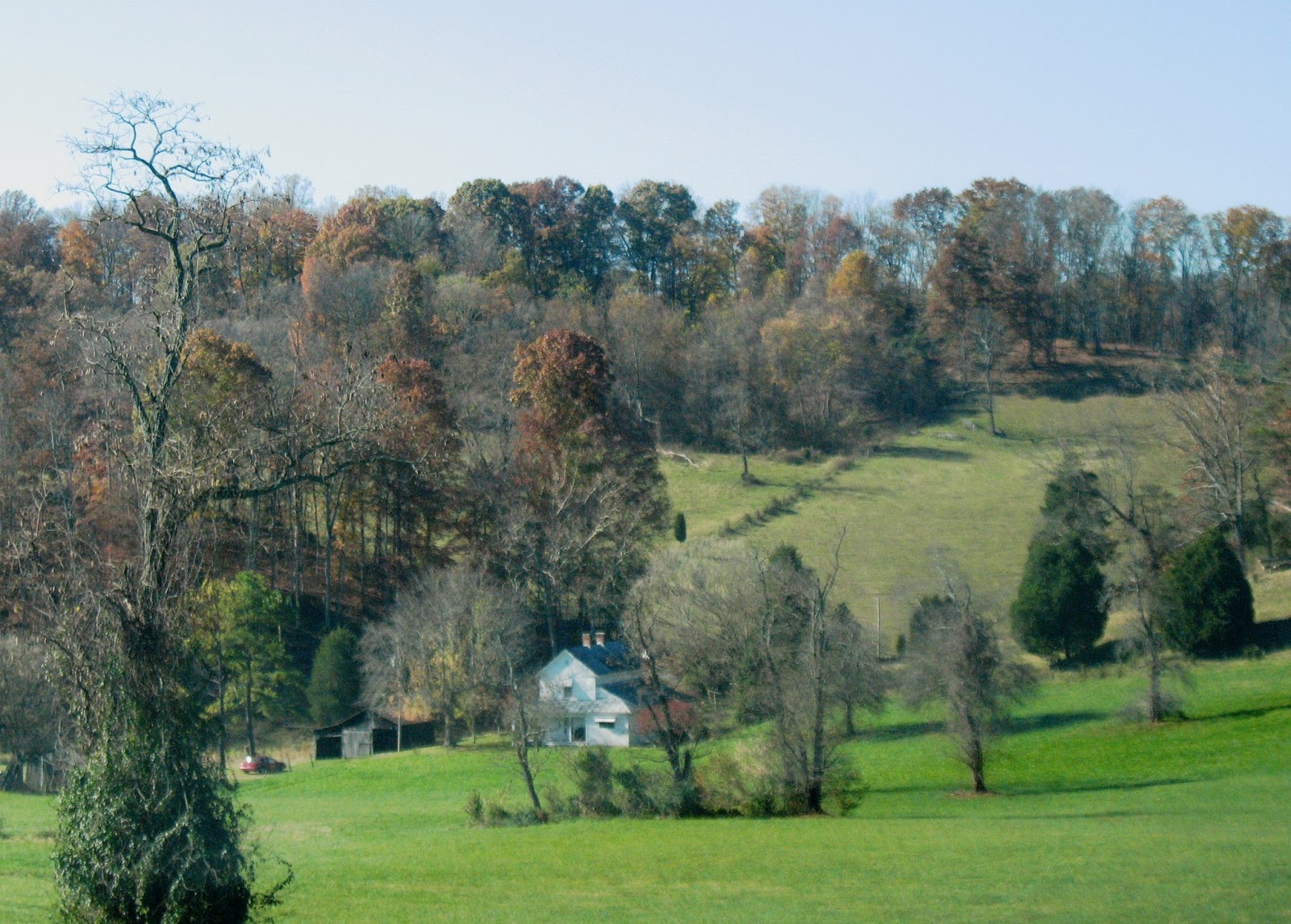
Just as certain qualities of urban centers are a culture all their own no matter what nationality marks them, so it is with communities tucked into mountain crevices. I felt at home in Northern India partly because it reminded me of home in Northeastern Tennessee, where a drive along curvy mountain roads showcases sheds of patchwork tin and sometimes-dilapidated barns with partially-intact roofs, clinging to life a little longer in solidarity with their older cousins in the Alps. 

Upper East Tennessee, USA

Wednesday, February 13, 2013

adventures in living cross-lingually

Street cleaner in Madrid. This gives you an idea
the scene. photo by Jose Angel Astor
Tuesday afternoon I stepped out of my building to rush through centre ville's lovely maze of narrow streets to my afternoon French writing workshop in a much less aesthetically pleasing classroom south of centre ville at Aix-Marseille University. I quickly reached the end of my block, turned the corner, and slowed minutely while I fumbled with my phone, trying to call my French language exchange partner to update her on our post-class meeting time.

Then I realized the "Mademoiselle" I was hearing was aimed at me. Normally here, strangers don't speak to or acknowledge each other on the street, unless asking for directions, and I was sure the street cleaner man (I don't know what they're called here) with his fluorescent reflective vest and rolling trash can had to know these streets better than I do.

My feet paused their rushing, though my brain was still trying to make that phone call and get to class on time. The man of 50-some years had a friendly, kindly demeanor, but unfortunately, I didn't understand at all what he said to me. He wasn't asking for directions, and when his French didn't fit the one contextual situation that seemed possible, I was lost. Plus, my head really didn't have time to stop rushing long enough to have a real conversation with him, and I still have to concentrate very hard to have any hope of understanding.

So I confessed that I didn't understand and apologized that my French isn't very good. To which he then repeated the one word I did understand: "le tableau." A painting. He proceeded to pantomime what a painting was and gesture down the street, where there were no paintings, billboards, or even graffiti in sight. Okay, sir, I understand this conversation has something to do with a painting, but what? Alas, he never explained--or I never understood--what he was saying to me about this painting.

Finally, 30 seconds later (which feels much longer in such little quotidian street scenes) we both admitted defeat. I apologized again for not understanding. He's said good-naturedly, "Ce pas grave." (Basically: No worries. It's not a big deal.) And my feet commenced rushing with my brain.

But the rest of the way to class my brain had a mystery on its hands, one that will never be solved: What in the world was this man saying to me? Why did he stop me? None of the possible scenarios I can imagine seem the least bit plausible: He's an artist and wanted to paint my picture? Unlikely. He was hitting on me? Unlikely, as he was more grandpa than casanova. He's selling paintings? Unlikely, no fine tableaux were wedged between the trash can and broom on his rolling cart. I look like someone in a painting? Again, unlikely, as he'd seen me for all of 5 seconds before calling out "Mademoiselle." He's a scout out looking for blond girls to be painted by the artist who has an atelier (workshop) down that street? You got it: very unlikely. He wanted to know if I had any paintings to throw away? All together now: unlikely.

Does anyone out there have any plausible scenarios to contribute? Just because "ce pas grave" doesn't mean I'm not going to be curious about this for a while. And is "I was practicing French on the streets of Aix" an acceptable excuse for being late to class? With a little more time, a little less rushing, I might have understood. Would my teachers have been proud when I walked into class bearing a painting of myself that was going to be thrown away unless I bought it while scheduling a date with the street cleaner man and the artist down the street?

Wednesday, October 10, 2012

danger: ‘tis the season of riptides


This morning a very nice technician from France Telecom came to open up the phone line for my new French studio apartment, a critical step toward finally gaining internet access here at home. I’m glad he came this week instead of last week because last week I was in whatever stage it is of the language learning process that makes you feel like you’re drowning anytime someone addresses you in the language you’re learning. The kind of drowning where you stop trying to remember how to swim and just feel panicked as you sink.

This stage took me a little by surprise. After two heady weeks of being amazed at how much I could actually understand and communicate here (the bar was really low, so imagine the way a 3-year-old communicates: far from correct but finally using real words and more intelligible than her 2-year-old self—I could only hope my mistakes were as cute as those of your favorite toddler!), I suddenly felt like I couldn’t understand anything—or at least anything spoken at normal speed by anyone with a French accent (i.e. REAL French versus the slow, sometimes-stuttering version spoken by the various stripes of non-francophones I’m often around).

I entered week #4 here fully prepared to drown for the next three months until I reach that magical point I’ve been hearing about: the point where the French fairy godmother waves her magic French-English dictionary, dropping French dust all over your head, and suddenly everything (or at least a whole lot of things) makes sense. I wasn’t relishing the drowning, but in my best moments I was prepared to push through and stay alive somehow (drift wood, anyone? Sea turtles willing to give me a ride?). It helped my resolve to get a little extra sleep this weekend. Sleep is almost as magical as fairy godmother dust.

Happily, so far this week, I’m instead floating again—not swimming yet, but not drowning either. So when Monsieur France Telecom Technician and I had an entire conversation in French, I think (perhaps wishful thinking) I understood the most crucial points: the line won’t be operational for two more days, and it’s the telephone company I’m using for service who will give me the phone number for my landline. He said a few other things in those sentences, but I’m just telling myself those things weren’t critical. The past two days have held other similar moments of mostly understanding. I’m still spelling R-E-L-I-E-F the English way, but I once again have hope I’ll eventually think it in French.

But I can’t go through the drowning moments without having my already strong sympathy magnified for non-English-speaking immigrants to the United States. Again and again here, I’m struck by the tables that have been turned. It’s as though when we read through the play the first time, I played one character. Then, just to mix things up, the director told my fellow actor and me to trade roles. Like any good actors, we’ve been expected to completely identify with whichever character is ours for that reading.

In Nashville, I donated household goods to a free garage sale for international students arriving for grad school at Vanderbilt University and needing to furnish their new homes. Here, I’m the international student who is the grateful recipient of other people’s cast-off and loaned items.

In Nashville, I assisted with English classes for Somali Bantu refugees, guided the occasional non-anglophone Starbucks customer through an order, and tried to speak slowly in conversations with new international friends whose English was so much better than my French is now. Here, I’m the one stumbling through sentences and replying to kind (or not-so-kind, I’m really not sure) statements with the glassy eyes and hesitant nod of one who is trying to understand but clearly has no idea what the person has just said.

I’ve felt like I’m drowning despite having a whole lot of preparation for the deep end: I arrived here with a base of French from three years of study in high school and college; I’m educated and know how to study and learn; I’m a words person, so I get the different roles different words play in languages; the language I’m learning operates on reasonably similar terms to my native language, shares an alphabet, and even shares quite a lot of words; transitioning between cultures is quite easy for me; I’m in a city where there are a lot of people (almost too many!) who speak my native language; and I’ve had tons of assistance from friends of friends from my home country or from other English-speaking countries. All that, and I’ve still felt like I’m drowning in the French ocean.

If you’ve never drowned, it can be very hard to imagine what it feels like. You might even find yourself hearing of the latest drowning and be thinking, “Well, why didn’t you just start swimming?” “Why didn’t you call for help?” “Why did you go out in that water in the first place?” If you’ve never drowned, you might not realize that panic can make your limbs forget they know anything about swimming if they ever knew how to swim in the first place, that no one was paying attention to the call for help, and that sometimes the scary, unknown waters are still better than the shore.

Immigrants sometimes get a very bad rap in the U.S. (and in lots of other places, too). Especially around the issue of whether they’re learning our language or not. And sometimes I think it’s just helpful to trade roles for a little while—either in reality or in your imagination—to try to understand how hard language learning is. I’ve met people in English classes in the States who never got to go to school in their home country and never learned to write or read in their own language, so now they’re not only trying to learn English, they’re also learning how to read and write and hold a pencil for the first time in their lives. And I think I’ve felt like I’m drowning? Sheesh. It’s amazing so many of those new to our country ever manage what English they do learn.

I’m fully expecting to have other weeks of drowning, but I’m hopeful the water-pruned skin and tired lungs will be worth it a few months from now when my French is good enough to help some other newcomer understand what Monsieur France Telecom Technician is saying. ALL of what he’s saying. And this week, I’m immensely grateful for a rest from the drowning.

Sunday, September 16, 2012

real life house-hunters international - no fluffy reality tv here

Aix Cathedral - credit:
  http://www.provence-luberon-news.com/ 
First episode: Oh So Naive
Viewers meet freelance writer Kami Rice who is amazed to have the unexpected opportunity to study French for the fall semester in beautiful Aix-en-Provence, France. In late June, from the comfort of her happy apartment in Music City, USA, she begins her housing search online. She first thinks she can get off easy by renting from a friend's landlords, but the location of their house isn't going to provide the immersion experience Kami is searching for as she embarks on the quest to move beyond elementary level French and to write from within this old, inspired city in southern France. She turns down that first place in early July after thinking she has found the "perfect" French studio apartment in the large 18th century home of an artist. In email exchanges--with lots of Google Translate assistance for Kami--the painter says the studio is available. Within hours, Kami replies that she wants to rent it. [close-up of happy, excited, hopeful and NAIVE Kami]

Episode recap: Dejection
It's been three weeks, and Kami still hasn't heard back from the painter. She doesn't know how business works in France, but she doesn't think the deal has been sealed yet. Now in the midst of packing up her happy Nashville apartment, she's getting worried. She finally asks a friend to help her call the painter. The painter doesn't know who Kami is. The studio is no longer available. Thus Kami is launched into weeks of Google Translated emails trying to find housing. Her French is not good enough for making phone calls. The only replies she receives are from landlords whose places are already rented. Watch this episode online for all of the dreadful ups and downs and hours and hours and hours of behind-the-scenes footage of Kami viewing what seemed like every apartment available in the city of Aix. All the cute places she saw online back in early July seem to have been replaced by dreary, tiny, ugly, windowless compartments that are completely uninspiring for even the most uninspired writer. The one happy point in this episode came when generous donors told Kami they want to cover tuition for a second semester of French classes. She can stay in Aix until June! But this also ups the ante on housing.

Episode recap: Dead Ends
On the ground in Aix! Kami is sure her housing search will turn a corner now that she can view apartments in person. Along the way she has learned cultural tidbits such as that the French prefer to do business in person or on the phone. Email is not their strong suit. She tries to fight back against dejection by viewing all of the dead ends as a cross-cultural exercise that any true expat/world traveler must go through eventually. This only helps a little. A new French friend calls lists of apartments for Kami, to schedule appointments, but only manages to schedule two appointments after leaving many messages, encountering full voicemail boxes, and finding that many places have already been rented. French housing is reported to be always difficult. On top of that, again and again, Kami hears that housing in Aix is especially tight this year, so tight it's made the news. 40,000 students descend on the city this time of year. Kami's student visa and poor French are no match for them.

Episode recap: In the Heart of Centre Ville
46.5 hours after arriving in France, Kami steps inside her first available apartment for a viewing. A friend of a friend has come with her to translate with the landlord. Kami is already taken by the location deep in the downtown/center of old-town Aix near the ancient cathedral. Despite all of the "very old" surrounding the studio, the inside is refreshingingly new. Very new. Completely redone. No one has ever slept on the futon before. The kitchen and bathroom are beautiful - especially compared to the awful pictures Kami has seen again and again. The space is small but lit up beautifully by two large windows that welcome sun from late morning until late afternoon. The landlord says 27 people have viewed the apartment!!! [sped-up shot of many people entering and walking through the apartment one after the other] However, he's particular about who he rents to. He wants someone who will take care of all the newness. He's only considering 3 of the prospective tenants. Kami makes the cut.

Episode recap: Waiting
Kami and her helpful new friends call the landlord the next morning to tell him she would like to rent the place. The day goes by and he doesn't call back. The friends say that the French typically keep their work and personal lives separate, so if the landlord doesn't call back by supper time, most likeky he's chosen someone else because he won't call once family time begins. Kami views another apartment. It's fine but not as nice, and the friend who goes with her is concerned about the poor security of a ground-floor window with no bars on it. Kami then wanders the centre ville the rest of the afternoon/early evening, her first chance to explore without being on a mission to get somewhere. She falls in love with it a little more. She walks down the street near the cathedral to check out the first apartment's location again. But she's no longer hopeful it will ever be hers. As the sun sets, she wanders into a cafe to order her first French coffee on her own. [insert funny clips of Kami trying to order a vanilla latte and ending up with cinnamon hot chocolate instead] She checks her borrowed cell phone for the time. What? A missed call from 7 minutes ago? The landlord's number?! She calls him back. He tells her something in French. She apologizes that she doesn't understand. Can she have her friends call him, she asks? He switches to broken English and asks her to bring documents to a meeting with him tomorrow. She thinks she understands the documents he's asking for. She finishes her hot chocolate and stops off at the ATM to collect the first round of cash for the deposit, in case he wants it now - she's hopeful but senses that this apartment is not a certainty for her yet.

Episode recap: Patience
As Kami walks through "old-town Aix" today to meet the landlord, she discovers that the weekend flower and veg/fruit market is just minutes from her hoped-for new home in the middle of the narrow labyrinthine streets of the old city. "THIS is just where I've hoped to live," she sighs in the voiceover. She arrives at Number 16 and begins chatting with the landlord in a mix of English and French while waiting for her friends to arrive to help translate the fine details. The landlord drops the news that she is not the only candidate for the apartment. [shot of Kami's face falling] The number of renters he's considering is down from 3 to 2: Kami, who is looking for a 9-month lease. And a student who wants to rent the place for 3 years. [Audience groans. Of course the student will win. What landlord wants a 9-month renter over a 3-year one. But wait...] Then he tells her that her desire to pay cash makes her competitive against the 3-year person. [Take that, you mystery competitor.] He also likes her personality and seems intrigued by her writing work. [Wannabe writers sometimes take pity on real writers...like the time Kami was pulled over by a cop who had been a creative writing major.] He seems to want her to have the apartment but has to check over everyone's paperwork. He says to bring financial records for Kami and the friends who have agreed to serve as her guarantors (very common requirement in France) to his office on Monday. On Wednesday, he will call to say "oui" or "non."

And that, folks, is where we stand. Plenty of real-life suspense going on here. Will the next episode be "Moving In" or "Resuming the Search" or "Giving Up and Returning to the U.S."? Stay tuned to find out.

Saturday, August 13, 2011

greetings from the mumbai airport

I would have waved at you while I took this picture with my webcam or tried to situate myself to avoid the glasses glare, but that might have drawn more attention than I want. I've holed up for an hour or so in a very nice coffeehouse at the Mumbai airport as I wait for my flight to London. It's been several weeks since I've written in a coffeehouse, so I instinctively jumped at the chance to do it this morning/afternoon.

I was going to work on another project while I munched on french fries (from the KFC down the hallway) and my vanilla steamer (called "hot vanilla" on the menu), but as usual in airports I've been too distracted by all the interesting things around me to do any real work. It might be said that I'm in love with airports. They're really some of the most interesting places in the world...but then I think nearly everywhere is one of the most interesting places in the world, so perhaps my superlative doesn't really say much.

By the way, you're witnessing a moment of travel budgeting success: having just enough foreign currency to cover your needs until you're on the plane, but not so much that you leave the country with $10 worth of rupees you'll never be able to use. After my fries, steamer and the bottle of water I plan to buy, I'll have just 5 rupees left, which is worth, well, hardly anything in dollars. But what a relief to find that I had just enough rupees to get the essentials before my 10 hour flight. Yay!

So, interesting, distracting thing #1: When you order here, they ask your name so they can call it out when your drink's ready. That's good. Not unusual. Except this is the international terminal with names from all over the world. And nearly every name the barista calls out in his Indian accent ends up sounding the same to me. And apparently to other people, because no one's jumping to get their drinks. Speaking of names, I've decided that no one in the world should have a name longer than three syllables. When you add a fourth syllable, the name immediately becomes too long to remember. Take note please, parents of the world. :-)

Interesting, distracting thing #2: When I entered the coffeehouse, a woman--probably in her 50s, maybe British--I'd seen in line to check in for my flight, came up to me and said something I didn't understand. Turns out I think she was asking if I was "Jude." She's was looking for another woman and had thought a coffeehouse would be a good place to meet. She sat here for a little while and then left after finishing her drink. But a bit ago I saw her walking past with another woman. Apparently, that's Jude. Glad they found each other.

Interesting thing #3: This isn't distracting because it was observed on the rather long scenic bus tour I got traveling on the airport bus from the domestic terminal to the international terminal. There's a ton of building going on at this airport right now. Big stuff is being built. Pretty interesting to see all the workers. One of the buildings had a sign saying it's a parking garage. Does anyone know what the others are? India's on the move?!

Interesting, distracting thing #4: I overheard two British guys talking here in the coffeehouse's comfy chairs (when they parted ways it sounded like they'd just happened to run into each other here), and it sounded like one of them said something like "America won't let me into their country." He looked harmless enough, so now I'm curious whether that's what he really said and if it is why we won't let him in.

I guess that's enough interesting things to make you feel like you're here with me right now. It's about time for my last bathroom break on Indian soil this go-around (not on the literal soil, of course) as I saunter toward Gate 10. Catch ya from the next continent.

Sunday, August 7, 2011

writing, writing

Additional written fruit of this visit to India can be found at InterVarsity's Emerging Scholars Blog, where I'm one of the summer's guest bloggers. Two more installments will make their way there this week and next.

July 25 installment - Heading East: Kami in India

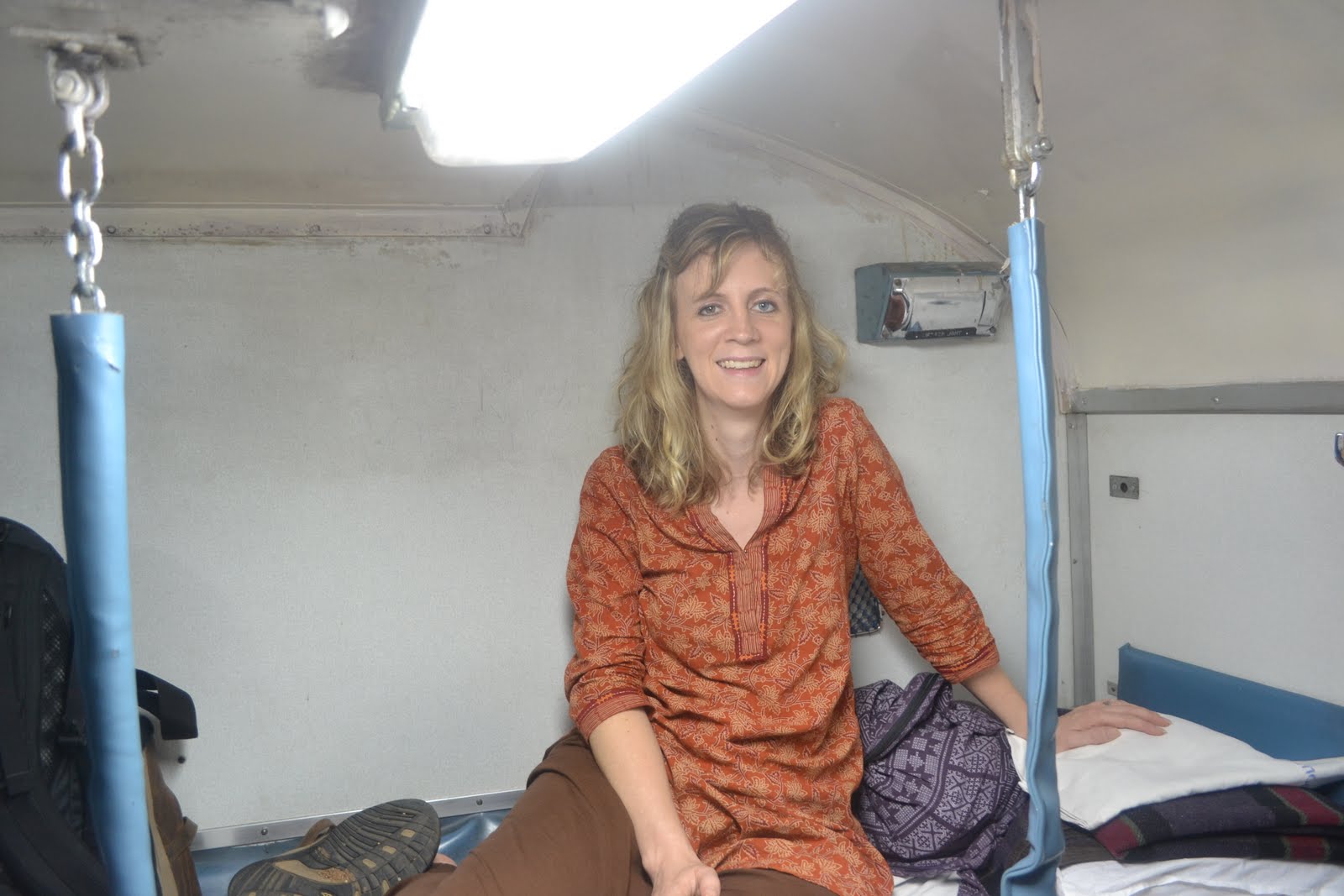
Taking the night train from Coimbatore to Chennai with Sheela.

I told Sheela it felt like we were having a slumber party...but I had to explain what slumber parties are.


Twilight on the beach in Chennai = cool and peaceful.

John and Jenny helped Sheela show me some of the ancient temples (i.e. 1500 years old and more) in Tamil Nadu state.


Recreation of traditional village homes at a cultural center.