Thursday, August 13, 2015

pulling back the curtain on village life

One need not go far to find one of the picturesque villages that sun themselves atop so many of Provence’s hills. Views of their clumped-together, ancient, warm-colored stone homes and the church bell tower that usually rises from their midst make it easy to imagine the idyllic life that’s lived along these villages’ quaint and very old streets.

For the past two-weeks, I’ve been house-sitting for friends who live just below one of these gorgeous gathering places. I’ve walked through Ventabren village a couple times before this but never alone and never with real time for wandering.

But I’ve now done both. And it’s been one of the treats of this house-sit to climb the stone-cobbled chemin up to the city during a couple recent twilights and listen to sounds of dinnerware clinking and pleasant conversation as I wind my way through the close-set homes. I found myself wondering--and even assuming that it must clearly be so--whether life on this hilltop is as convivial as seems possible. Surely, everyone knows their neighbors—the several hundred others perched there together—and it’s one big happy French family. Right?

Well, sometimes assumptions don’t hold up.

Today I managed to rouse my night-owl self early enough to attend the village church’s 9 a.m. Wednesday morning Mass. It’s August, which is high vacation season here in France and a time when many things shut down, so I wasn’t 100 percent certain the doors would really be open. On Sundays the services rotate between this church in Ventabren and those in a couple other nearby villages.

But the doors didn’t disappoint, and I slipped onto a bench a few rows behind the three other women who composed the morning’s congregation.

When it was time to “pass the peace,” it was nice to see real warmth in their eyes as they greeted me, the interloper in their village community.

My other goal for the morning was to visit the village bar/café, but it wasn’t open yet, so I climbed up to the very top of the hill to enjoy some reverie and prayer with a cicada choir for accompaniment while I regarded the quiet, green valley below.

Then as I descended, I exchanged bonjours with an older man who was also descending into the village. We enjoyed a friendly chat as we walked down the stone stairs past the ruins of the 12th-century chateau of Queen Jeanne that put Ventabren officially on the map back in the day. The man was born and raised in Ventabren, though not in the village itself, and has always
lived in this corner of the world. Despite never moving away, renewing his passport is one of the tasks on his to-do list, since it expires soon. As we passed the former school turned present-day library, he noted that this is where he spent his elementary school days and pointed out the spot where a wall used to separate the back courtyard—pre-dating his school-time era—to provide one courtyard for girls and one for boys. There was a day when the genders didn’t mix at school here.

We parted ways, and I arrived at the tiny café. Its four round tables stretch across the small front terrace. Inside there’s a typical wood-paneled bar and some walls of shelves filled with beer. I learned that the area marked “private” to the right of the bar wasn’t seating for private functions as I first assumed. It’s the proprietor’s kitchen.

Throughout a pleasant hour and a half, I was busy. I gazed at things. I read. I took obligatory Instagram photos. I exchanged bits of pleasant conversation with other customers. It was all quite friendly. Just like village life should be. Right?

But the most interesting part of the day came while I chatted with the owner and finally got to ask all of my burning village-life questions.

And here’s what I learned. Sometimes assumptions don’t hold up.

Mr. Proprietor has lived in Ventabren for 30 years. Before that, he was from nearby Aix-en-Provence, for the first 25 years of his life. In addition to running his café/bar, he does some odd jobs for the town hall, which include providing transportation for elderly folks to a weekly meal at the school (during the school year) and delivering official documents to offices in Aix.

His café is only open during the summer – in part because there’s no space inside for tables and the terrace isn’t so pleasant in the cold, but also because most of his visitors, like all the other customers I talked with, are tourists, not locals. So he’s open during tourist season.

His café and one restaurant are the only businesses in the village. These survive, he says, partly
because they aren’t dependent on the locals to keep them going. But the village bakery, a staple of any French community, shut down 20 years ago.

And here Mr. Proprietor explained that there are three things needed to support a thriving local business culture in a village...and to support all those idyllic images of relaxed, sun-baked community life:
  • The village needs at least 1000 inhabitants. Ventabren village (the commune includes more than just the village, so “Ventabren” officially has a larger population than just the village’s numbers) only has 400-500.
  • The village needs a central plaza where the community can regularly gather. Ventabren doesn’t really have this. Apparently, twice a year village residents enjoy a potluck together, but that’s the real extent of the neighborliness. So much for all those idyllic images. Half the village is composed of renters who rotate regularly, so this affects village life. He said people are neighbors but not really friends.
  • The village needs not to be too close to other larger towns and cities with all their amenities. Ventabren, for example, is a 20-minute drive from Aix and 30-45 minutes from Marseille, with the region’s largest commercial districts lying between Ventabren and Marseille.

Thus, as a result of all these things, Ventabren is something of a really pretty dormitory. People go out during the day to their jobs and other activities and come back at night to sleep in their very old stone homes. And that’s as good as village life gets sometimes. If you want the quiet and want to keep to yourself, then maybe this still sounds like idyllic village life to you. For others of us with busy imaginations and dreams of community hugfests (or bises-fests, as it would be here), it might be good to remember that Ventabren—and other Provençal villages like it—looks good on Instagram but might not be your best French dream after all.

My conversation with Mr. Proprietor was interrupted by the arrival of a French girl from Aix with her French guests, an older couple from Paris. Eventually they started posing many of the same questions as I did about village life. It’s not only we Americans who are curious about the daily goings-on in the villages of Provence.

Tuesday, July 21, 2015

along a country road with a bunch of people on bikes


Earlier today some friends and I set up camp along a random stretch of country tarmac well north of where we normally pass our French days. Upon blankets and camp chairs claiming the scant few feet between the edge of the road and the ditch-like descent into brush, we picnicked, while other small smatterings of families and friends did the same thing along the same road. The occasional official-looking car passed by. Some drivers honked. Some passengers waved.

But then: Sights. Sound. And action!  The caravan was arriving! With music, trapeze-swinging animators, cars that no longer look like cars because they're wearing sunglasses, and...FREE STUFF! It's a parade on steroids--since the second part of the day's attraction doesn't allow steroids, the parade put on by the Tour's sponsors gets them all.


I missed this part of the merriment two years ago when the Tour de France passed through Aix-en-Provence. I must confess that since there are a lot of things in the world to pay attention to, the Tour de France hasn't managed to make the short list in my life. But when its route around Aix passed along the periphery road, a two-minute walk from my little studio apartment, I figured I needed to see it. Plus, the circus performer types who had jumped and rolled and stilted through town a couple days before to drum up excitement had given me a Tour de France key chain. Out of gratitude I had to go. But no one told me to go early enough for the parade. So I didn't know what I'd missed until today.


The 2013 Tour de France advance team in Aix-en-Provence.
But as cool as it is to fish free stuff out of the weeds, the best part is still the bikes and their masters. Two years ago, Aix was the beginning point for one of the stages, so when the bikes passed by, everyone was still clumped together and following city speed limits or something. However, for our countryside cheering near Veynes, the peloton had split into two groups. This is a good thing because I'd decided just to take video and not try for photos so I could concentrate on what I was seeing. However, I forgot to flip the camera off of selfie mode after that selfie we took in our free hats from the caravan, so all I got of the lead riders was video of myself yelling for them. Lovely.

But fortunately there was time to regroup before the rest of the riders whooshed past in all their colorful glory.


There’s something so surprisingly beautiful about it all. And it goes by so quickly. All your senses are adjusting, trying to figure out how to take it in, trying to figure out where to focus, and just as you’re almost acclimating to what’s going on, it’s over. And there’s no redo. No replay. No, “let me see that again and focus on some other part of it, please.” And sometimes, somehow, that’s got to be enough--a few seconds of beauty to be thankful for.

The countryside of which I speak. (2015)
And for your future reference, our little group voted unanimously (I think, anyway) that given the choice of walking out our front door to watch the Tour pass through town or driving two hours to see it in the countryside, the countryside wins.

Our band of fans on the roadside. (2015)

The riders arrive! in the 2013 stage
 that passed through Aix.
2013 in Aix.

2013 in Aix.

Thursday, June 25, 2015

my balkans story in the washington post!

I've been published in the Washington Post! Exciting, right? 
Somewhere in Montenegro. July 2014.

Um, well, kinda. 

One of the big reasons to seek getting articles placed in these big outlets is that the stories will reach more people. Except that in the wonderful real world of publishing and editing, sometimes the story gets lost. 

Per the editors' requests, I wrote a long account of mine and Olivier's 12-day road trip in the Balkans. Difficult to condense down to however many words I was given, but I tried.

In the end, after the usual edits, they decided to run the story more as a photo essay than an article. Okay, no problem. Photos make for a cool spread, and it's great that my friend Olivier has ended up being an equal partner in what's been published.

But the way the story is cut, well, it leaves readers hanging. It's like the story's just getting started and then it ends. Friends who've read it have asked where the rest of the story is.

Anyway, that's how freelancing works. Once I sell them the story, it belongs to both of us, not just to me anymore.

So with those caveats, here's the link: "Driving through the Balkans, a rocky road"

Enjoy! And stay tuned. There's more to the story, and hopefully one day I'll find a place to tell it.

Monday, May 11, 2015

la vie est belle


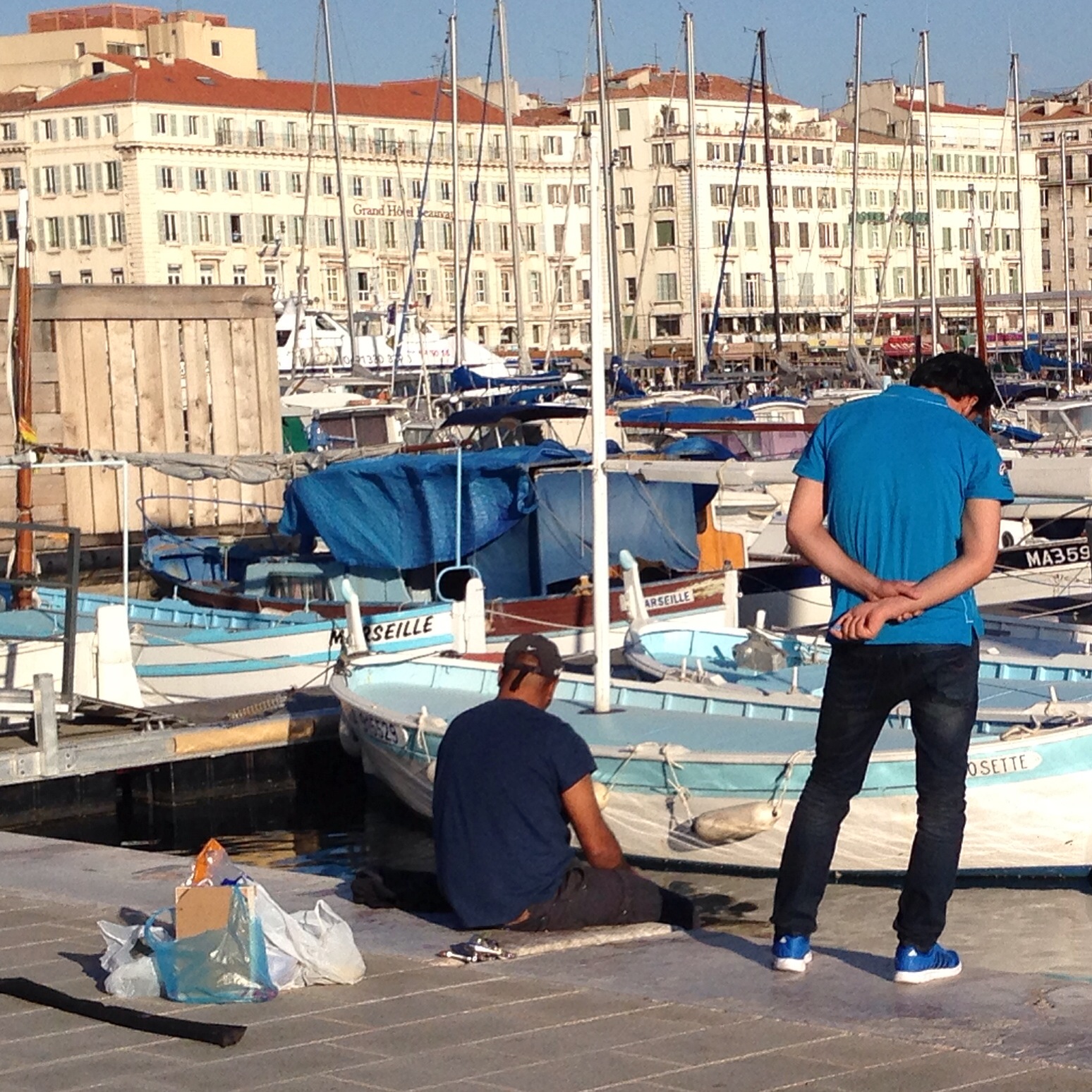
The Vieux Port is getting busier these days. A couple days ago a huge yacht was tied up there, dwarfing all the smaller boats who thought they were cool until the new three-masted kid showed them up. I was curious and asked one of the employees guarding the gangplank what all the pomp was. He told me it was a cruise. So I looked it up a minute later when I was back home. He was right (imagine that! Maybe it’s more accurate to say that the surprising thing is that I understood him correctly!). Check out Le Ponant for your next yacht-cruise. You know, if you don’t own your own yacht, that is.

It’s a new thing to be confident enough in my French to ask extraneous questions. This may be more exciting than seeing strange boats in the neighborhood.

Yesterday I finally noted that more of the smaller vessels that are docked in the Vieux Port are heading out to sea. I guess the weather—it was AMAZING this weekend—is finally good enough for pleasure boating. I’m new to this whole living-by-the-sea thing, so my mountain-born self thought people would be hitting the high seas the minute the winter rains ceased.

Life is beautiful.

~*~

I’m enamored with the Vieux Port. It’s only been around since 600 BC when Phocaeans from Phocaea (modern-day Foça in Turkey -- not to be confused with the Phoenicians from Phoenicia in modern Lebanon, Israel, and Syria) saw its value and opened a trading post nearby. Vieux—“old”—is practically an understatement. Today it’s the biggest gold mine for people-watching. Especially in the evenings, it’s just full of a fascinating variety of people. Lots of families, with parents from all over the world all warning their children away from the water’s edge. Apparently, children of every nationality have to be taught that bad things happen when you run full speed ahead off the edge of something that borders water. Once everyone is safe, parents can be spotted helping their small kids spot the fish swimming below the fuel-stained water. 

Tourists and picture-takers abound. And people lounging on benches. Young and mid-aged men of Arabic descent. Cute, withered old couples. Joggers of both genders. Men, sometimes with a child in tow, fishing. One day there was what appeared to be a mom and three teenage daughters kicking a soccer ball around in a circle—dressed in normal casual attire, not anything particularly sporty. Usually there are two or more groups of musicians enamoring the crowd and earning tips. There’s the guy that sells the chocolate covered almonds (or some other nut, I haven’t verified which one) from his little white cart with stickers on the sides. They smell scrumptious. Maybe one day I’ll drop a euro there.

Life is beautiful.

~*~

Seagulls regularly soar past my fourth-floor windows (as if on cue, one just swooped past as I started typing this sentence). Yesterday around 7:30 pm the light coming from the west and shining on the building across the street was gloriously golden. And instead of seeing the seagulls themselves, I watched their shadows swoop along the building opposite. It was a show I wanted to watch for a long time.

But I had to return to my work.

Like I do now.

Life is beautiful.


Wednesday, April 22, 2015

lunch in montenegro

To make up for my dearth of promised reporting on last summer’s oh-so-lovely Balkans road trip, voilà, a little account of A Lunch in Montenegro.


During the two-day return trek north from Albania back to France, Olivier and I ended up stopping for lunch on Return Trip Day One at a resort on the Montenegrin islet Sveti Stefan.

Being the go-with-the-flow travelers we are, we didn’t make any advance plans for pit-stops. Once we began to be hungry, we started consulting road signs and maps for a place to munch.

We found a pretty looking place—well, let’s just be honest: it was gorgeous—for lunch that day, so we pulled into the parking lot and began looking for the restaurant.

The beach, the buildings, the setting all seemed really well-to-do, but we’d been eating cheap for most of the trip, so it was nice to decide to have a little lunch splurge. It wasn’t until after that fact when I recounted the details to my friend Cydil, our host in Albania, that I learned just how exclusive this lunch stop was. She didn’t know it was possible to get onto the resort’s islet without an advance reservation and thought that overnight stays ran a minimum of 1500 euro/night. Fortunately, lunch was not quite as expensive as that.

When we asked at a covered booth at the edge of the beach and beside the bridge to the island, the hosts said we could call about reservations for the next day. We explained we wanted lunch that day. Tout de suite. Then they acknowledged there were tables available still that day and without further ado escorted us over a narrow isthmus through a 15th century village turned resort to an umbrella-covered table overlooking the sunny Mediterranean waters.

We decided we could probably manage to handle the ambiance. It was our most expensive meal of the trip, but the pasta and salad and dessert were delicious. And the view was worth whatever extra we paid to eat there.

However, I don’t think an overnight stay at Sveti Stefan is ever in our future. Lunch will have to suffice.


Sunday, March 29, 2015

balkans outtakes you don't want to miss

Ljubljana. July 2014.
It’s been three-fourths of a year since that road trip through the Balkans last summer that I promised to write about more here. I must apologize for the whole not-keeping-my-promises thing. I suppose you’re hugely disappointed and have had to seek counseling to overcome your rage. So sorry. ;-)

Anyway, I’m presently revisiting the trip for a travel story pitch that, in the way of publishing’s slow-turning wheels, has finally been picked up, which means I’m plumbing my memory, my journal, and my notes for all the details I can get my fingertips on from that trip.

Here are a few overview thoughts that won’t make it into the article. These are the outtakes, I suppose. But brilliant outtakes they are, so read with attention, please. ;-)

To recap: I went on a little 12-day road trip with my friend Olivier to visit some other friends. We started out in Aix-en-Provence, France, drove across Italy, and slept our first night in the Balkans in Ljubljana, Slovenia (though apparently some scholars don’t agree over whether Slovenia is officially Balkan…if I’d known this ahead of time, I would have polled the Slovenians I met ;-) ). From there we traveled south, eventually traversing Croatia, Bosnia-Herzegovina, Montenegro, and northern Albania, before driving through all those countries again on the return trip.

Similarities
Of course, one road trip does not Balkans experts make us, but the choice to descend the peninsula by road gave us a chance to observe a little the ways these countries aren’t all the same as well as how they do fit together with some regional commonalities.

For starters, a somehow-comfortable melancholy seemed to pervade the landscape all along our route. Melancholy can be soft or harsh, and this version seemed to veer toward soft, honest.  

A lingual current also ran south with us. Though the languages are different, key words for tourists were similar—the restaurans, the stari mosts, and more.

To Each His Own
But each country also seemed to have its own personality—one it would have been nice to mine more deeply:

Slovenia seemed lively yet calm, two adjectives that admittedly don’t seem to go together, yet they meet in Ljubljana, Slovenia’s capital. This country has seen less war than Croatia and Bosnia, and one can sense this.

Croatia is absolutely beautiful yet feels already discovered. It didn’t feel so off-the-beaten path as the other places we visited. Like Slovenia, it’s already a member of the EU, though it’s not yet in the eurozone while Slovenia is. And tourism is already a big deal in Croatia, which has a good reputation for knowing how to showcase its part of the region’s treasure collection. Overdone tourism can make a place seem stripped of personality. But we also didn’t have any local guides in Croatia, so it’s possible we just missed the good parts.

Bosnia felt potentially dangerous, courtesy of its recent past, without actually being dangerous at all. Thus, it felt like a place not-yet-fully discovered. Tourism hasn’t been overdone here yet (YET!), while at the same time, there are growing resources for tourists.

Montenegro was just green and beautiful. We didn’t stop off in any large cities, so our route through Montenegro’s mountains gave the impression of a country of tucked-away hamlets that keep to themselves but are welcoming when you enter them.

And Albania felt like a place wrestling more than all the others with its past and its present. It’s in that awkward adolescent stage. Where Bosnia appears to have chosen a direction, Albania is still working to fully aim itself, but this is part of its charm for those travelers who enjoy discovery and a little dirt mixed in with glitz, antiquated farm implements and the occasional donkey mixed in with modern multi-story homes and lots of new-looking cars. Tirana, Albania’s capital, is a happening place, with plenty of nightlife, a place definitely in transition.


For the super-motivated and curious, here’s a link to a very helpful overview of the region’s complicated (for us outsiders anyway) recent history: “Understanding Yugoslavia.”

Friday, December 5, 2014

second floor perspective

For the past three weeks, I've been living in temporary housing back in my old neighborhood here in the center of Aix. It's nice to be back after spending the summer and first part of fall in Bouc-Bel-Air, a village outside Aix.

During my nearly two years living in centre ville, I was in a ground floor studio apartment. It had its charms, but the views were not among them, though I suppose you could call it exciting to get to watch the Germans try to back their car into the garage across the alley from my windows. And sometimes I could see a sliver of sky that lit up nicely in the morning. But mostly, I could see the wall across the street. Not exactly the stuff of inspiring vistas.

My temporary abode, though, is the epitome of inspiration. With four grand windows looking down onto street level shops and across to apartments and tiled roofs and over to the tiny place (plaza) with the empty press kiosk, the small fountain, and the grand trees, all with people passing to and fro, well, I could be mesmerized all day long. My very own reality TV show passing below my windows. Alas, life's been too busy in these three short weeks to spend much time watching TV.

In addition, it's lovely to gain a different perspective on Aix by viewing it from aloft. The streets, the windows, the roofs all look so different from this perspective. I think there's a metaphor in there somewhere, but I'll let you find it yourself.

To whet your appetite to the reality-show-that-won't-be-realized, voilà - some stills from "Slice of AixLife: Rue Jacques de la Roque."

First, the place and the businesses:


Next, some neighbors, or at least their homes:


Like me, the girl who lives behind the two windows on the bottom
left keeps the shades open a lot. I think she's a student, and she
has a big cat. I like knowing about my neighbors - but is that
stalking or just being neighborly?

The Chair-Fixer guy: I've seen him there before because this is my 'hood, after all, but I never realized he was there SO often. Almost every day. And not only does he advertise at this corner, but he also actually fixes chairs here, wetting the straw straps in the plaza's fountain.


Transport: This street connects with the busy periphery road and has a reasonable amount of its own traffic for such a narrow street.


Finally, some neighborhood night shots:


It's not the best shot, but that bright light
dot is a star I can see from my
temporary bed. It's lovely.
 

Tuesday, November 25, 2014

honoring a mentor-friend: John Mogabgab

At Ken's Sushi with John Mogabgab during a quick, 24-hour visit to Nashville in December 2012.
I thought of John often this past summer and intended to call. I wanted to know how he and his wife, Marjorie, were doing; how his lovely elderly mother, Babs, was faring; what editorial projects he was working on; and more. And I wanted to update him on the parts of my life that don't make it into newsletters. It had been a year since my last State-side visit and keeping up well via email between in-person visits wasn't John's strong suit. So I planned to call. But a summer full of apartment-hunting, moving, travel, and work, added to the 7-hour time difference, meant I never got farther than transferring his phone numbers from my US phone into my French phone in preparation for a spontaneous chat.

The last of my biggest summer travels took me to Togo for a week in early August, then on to Abuja, Nigeria to visit a friend for a couple days, and finally to Lagos, Nigeria to visit another friend. In Abuja I'd been mostly internet-less, so I was happy to fire up my smartphone upon arrival chez my friend in Lagos and connect to their wireless internet. Once connected, Viber alerted me to new messages from my American friend Nicole who is now living in South Africa and used to work with John.

The first message, sent the day I left Togo, told me Nicole had recently learned that John was gravely ill. The second, sent the day before I received it, carried the unbelievable news that John Mogabgab was no longer residing this side of heaven. He and I would not be having the catch-up chat I'd been planning for months now.

:'-(    :'-(

Sometime in 2003-ish when I was slinging espresso at a Music Row Starbucks in Nashville and was beginning (barely beginning) to launch my freelance writing career, I discovered that several of our customers worked at the Upper Room publishing house down the street. We began talking writing when they came for their daily (or more than daily) coffee. Finally, I one day gathered up the courage to ask Steve, the publisher at the time, if I could have a formal meeting with him sometime when I wasn't on the Starbucks clock.

He readily agreed. And when I arrived for the meeting, I discovered that he'd made plans to introduce me to many of his editors. That meeting led to a long-standing relationship with and a variety of work for the Upper Room. Unfortunately, John Mogabgab, the editor of Weavings spiritual formation journal, wasn't available that day.

But no matter, because when John next came to Starbucks, he apologized in his gracious, gentle way and suggested that we meet for lunch soon. We did. And what began as a one-off networking meeting morphed into a professional mentoring relationship morphed into a life mentor-friend relationship morphed into being an almost surrogate parent for a girl who lived not-so-near her actual parents.

Thus proceeded years of regular lunches together. Sometimes John's equally exceptional wife, Marjorie, was able to join us. Sometimes not. Most often we met in the cozy book-lined dining room at Alektor Café, a café-bookstore-gift shop run by an Orthodox priest, until it closed/relocated. Afterwards our usual choice was Ken's Sushi, where lunches with John transformed me from sushi novice to sushi lover.

John has been one of my most consistent mentors during the past decade of the windy vocational path I travel, the one that finally brought me to France two years ago and is often filled with big decisions that don't readily follow worldly wisdom. With his height and girth and thick gray-white hair and beard, his physical presence is strong, yet it's tempered by a scholarly gentleness. His relationship with the Lord runs deep but never descends into spiritual platitudes. His counsel is wise and never pushy. He acknowledges the challenges and paradoxes of faith but never seems disturbed by them.

One of my favorite quirky traits of John has been his capacity to reference just the right pearl of wisdom at just the right moment from just the right saint/great thinker/religious leader. Partly I'm enamored by it because remembering quotes is not one of my talents. I always picture his head as containing a giant quote Rolodex that automatically whooshes around (with appropriate Rolodex card-flipping sound included) and falls open to the perfect bit of wisdom for whatever I'm wrestling with. Part of what was beautiful about this quirk is the way it subconsciously reminded me that the beliefs I claim didn't just spring up yesterday. Along with John and all these others that he could quote, I'm part of a long, world-wide lineage.

Courtesy of my un-talent, I can't quote most of the great things John said to me over the years, but one question--a simple one, really, yet a profound one--that occasionally pops before me again at important crossroad moments and that I hope I never forget is this: "What can you do with your whole heart?"

That's a question I hope to continually hold before the Lord, pausing in thankfulness for John's influence in my life when I do.

---
John, I'm sad that my impending visit to Nashville won't include another visit with you! But thank you for your gracious generosity to me and for letting God work through you to give to me. Thanks for sharing your life and thus being a marker of God's faithfulness in mine.

Saturday, October 11, 2014

carte de sejour "Compétences et Talents" - stop #3 back at the préfecture in Marseille

The little line outside the préfecture when I arrived.
I'm back with an up-to-the-minute report for my most dedicated reader(s) and more specifically for anyone who stumbles over here desperate for information on how to apply for this crazy visa. The rest of you should glance at the photos and then pick out your favorite country from the archived posts. :-)

Two weeks after my previous attempt to submit a dossier for consideration for the Skills and Talents visa, I returned to the préfecture in Marseille again today. This time my dossier included a budget for my project, plus a couple other little added documents that will hopefully support my case.

Given my experience with wait times two weeks ago, I arrived later this time, at 8:45 am. I had passed through the first windows (see previous post), collected my numbered ticket, and proceeded to the waiting room upstairs by 8:54 am. (Nothing like being precise, non?)

Around 10 am my number flashed on the big screen. Funny story, though - in the intervening hour, I
busied myself by adding a couple last minute touches to my dossier and taking photos of it, in order to have a good record of what I'd submitted. I also worked at figuring out the order of the seemingly random numbers popping up on the screen. I thought I'd sorted out which numbers were being called to which windows (it seems that each window deals with a certain type of visa issue, and you're put in the queue for the appropriate window), so I wasn't being as vigilant in watching for my number because I thought my number was still a couple numbers away. Suddenly, a woman sitting a bit behind me says to me, "That's your number, isn't it?" At first I said
Waiting upstairs for my number to appear on
the big French flag-colored screen.
no, because I thought I had the system figured out. Then I realized she was right and thanked her for her helpfulness as I got up. And then I realized that the fact she knew it was my number, and she wasn't even sitting directly behind me, meant she'd been watching me! Still, nice of her to help me out. (Glad I didn't happen to be fumbling around with any top secret documents or anything! - which I normally do all the time, mind you ;-) )

From this point forward, everything went very smoothly. I was called to the window next to the one I'd been at two weeks earlier. And the man at this window remembered me, even though I'd been his colleague's client. (She'd asked him a couple questions about whether my proof of residence was sufficient, etc.) He asked what I'd been told I needed to add and then verified that the budget was there and looked good. He flipped through the dossier, but didn't look at it too closely, and proceeded to log it in their system. He told me it normally takes 5-6 months to get an answer and that I'll be notified by email or mail (in hindsight I'm not sure whether he said "courriel" or "courrier").

He then gave me a récépissée that extends my existing visa for three months from today's date but noted that I would probably need to have it extended again (at the sous-préfecture in Aix) as it's unlikely I'll have an answer on the new visa by January 9. However, I'm going home for the holidays, and I told him I won't be in France when the récépissée expires. He told me that this is no problem, that since I'm an American, I can just enter France as a normal tourist or whatever and then go to the sous-préfecture and explain that I was away and need a renewal now. This sounds good in theory, but I have trouble believing it would all be so easy, so I plan to check at the sous-préfecture to verify before I leave France. In hindsight, if I had known my dossier would definitely be accepted, I might have been better off to wait until closer to the October 31 expiration date of my original visa to submit my dossier. That way the extension would have been valid until later in January. But that would have been a gamble too.

Anyway, that's how things played out. This man, like his colleague two weeks earlier, was very nice and made a semi-intimidating situation (anything to do with visas is nerve-wracking!) much more comfortable. I was finished with everything by about 10:10 am, so it took less than 1.5 hours from arrival to departure.

A couple other notes:
* If my bid for the visa is successful, I'll try to post a list of what I included in my dossier. For now, I won't go to the trouble of doing that.
* The first time I went to the préfecture, the woman asked me about office space or whether I will be working from home. Office space seemed important, something that's been verified by others here as I've told them about my process. So in the most recent iteration of my dossier, I included information about a new office sharing endeavor that's opened here in Aix recently and that I plan to make use of. I also included receipts from the office space I rented a few days a month this summer to try out having occasional work space outside my home.
* I did not include bank statements or any record of my personal financial status; I simply included a description of how my project will be financed and a budget for it. They never asked for the personal records for this visa, though I had to provide them for my student visa. Since I'm not rich, I wasn't sure my personal records would bolster my case, so I didn't add them. Hopefully, this was not a faux pas!

And hopefully, there will be good news to post here in a few months!

Tuesday, September 30, 2014

carte de séjour "Compétences et Talents" - stop #2: the préfecture in Marseille

Because every post looks better with pictures, I'll start with this one - after your visit to the préfecture, whether to nurse your success or your not-done-yet-ness you should check out this nearby coffeehouse/café/salon de thé: Coogee. I have no idea what the name means, but it's a really great place to wile away some hours.

Okay, on to business. Again, this little series of posts (see the label "Compétences et Talents" for the rest of the related posts) is to provide a helpful account to future seekers of a carte de séjour "compétences et talents" - if that's not you, you should go to the coffeehouse link and ignore the rest of this episode in the new tragicomic series "You Can't Buy Dossiers Like this in America."

After being counseled by one American friend that one should arrive very early at the préfecture to get a place in line before it opened and by another that she never arrives before 8 or 9 am--the préfecture opens at 8:15 am--I split the difference and arrived with a friend around 7:45 last Friday morning. A line had already formed outside the building, but it was nothing atrocious and extended only in front of the building - no wrapping around the block or anything. Now, I've also been told that this part of town seems somewhat sketchy, but again, I had no problems there. The friend who accompanied me said she's seen a fight in line (fighting over spots in line) nearly every time she's gone, but everyone behaved themselves on Friday. By the time I left the building around 10:15 am-ish, there was no line, and it looked like you could just walk right in at that point.

Once the doors opened, we eventually entered the ground floor, told a woman at the door what I was there for, and waited in a short line for the first set of windows (see photo). Once it was my turn, I told the man what kind of visa I was seeking. At first he said there were no more appointments for that until Monday, but he worked it out somehow and gave me a numbered ticket anyway.

Then we climbed to the first floor (in French terms, second floor for the Americans) where we took seats in a large waiting area. I waited a pretty long time for my turn at one of the windows. I had to watch the big screens (photo below) that flashed your number when it was your turn and told you which window to go to. What's tricky is that the numbers do not appear in chronological order at all, so you have to watch the whole time because you have no idea when your number will show up. No reading books while you wait. But don't worry, there's plenty of people-watching to do.

When my number finally flashed on the lucky game show screen (my friend and I concocted an entire game show scenario while we waited, by the way - I let you know when it reaches syndication :-) ), I was greeted by a nice woman at my window. I handed her my initial paperwork (application, etc.) and explained which visa I was there for. She asked me to describe my project - which surprised me, as I'd just expected to hand over the dossier in which the project was fully described. So, be prepared with a brief verbal explanation (in French :-) ).

She took my dossier, flipped through it, and seemed to like what she saw. At this point, I thought maybe SHE was the one making a decision about whether I would get the visa or not - I hadn't expected that (I'd expected a lot more waiting for approval or denial), but her initial actions made that seem possible. I had just been expecting to hand over the dossier, not to have someone look at it and ask me questions at this stage in the process.

Well, it turns out that the woman at the window seems to be the person who checks to make sure all the basic components of the dossier are present. In my case, while I had included a written description of the project's financing, I did not include an actual budget. So I have to add that and return. She was very nice and very apologetic that she couldn't accept the dossier yet.

However, I did learn that apparently once she accepts the dossier for consideration and registers it in the system, she/someone will print out a récépissée that day that will extend my current carte de séjour by 3-6 months during which time they will make a decision about the new carte de séjour.

So there you go, an exciting up-to-the-minute report on what I know so far about this process works!

Blurry photo of the first set of windows (on the ground floor) where you're awarded your winning lottery ticket number, aka number to determine when you get to go to the next window upstairs.

Waiting room on the next floor up, with their fancy game show boards that proclaim when you're the next contestant on "See Who Will Win a Visa Today!"

Tuesday, September 23, 2014

seeking the carte de séjour "compétences et talents" - stop #1: the sous-préfecture

I'm in the process of applying for a new visa, hoping to transition from my student visa to the "skills and talents" visa. Finding much info about the process has been difficult, and I've been pretty dependent on the Jennyphoria blog for the most complete info. However, she applied for this visa in Paris, which didn't tell me how things would work way down here in the south of France. Other info I found related the process of getting the visa through a consular office outside of France, which still left me in the dark.

So, in the interest of helping other future visa seekers living in France but not in Paris, I'm adding this little record of my experience to the internet's grand collection of helpful facts.

Here's the link to the official French info about the carte de séjour "compétences et talents." With a quick Google search, you can find the same info in English on the web sites of the French consular offices in the States.

My situation: I've been living in Aix-en-Provence for two years now studying French. So I've been here on a student visa that I first received through the French consulate in Atlanta and then renewed twice, once via the sous-préfecture in Aix and once via the student renewal office set up at CROUS on the Aix-Marseille University campus at the beginning of each school year.

So my attempt at this new visa is a visa renewal but also a change of type of visa. I've been busily preparing my dossier for the past couple weeks, mostly using the two links above to guide me in what to include in presenting my project. I'm not going to get into what my project is in this post, as for now I'm just documenting the process.

You're supposed to apply for renewal for all visas, including this one, two months before your current visa expires. I'm down to about 5.5 weeks due to traveling lots this summer and not being able to work on the dossier sooner. Here's hoping it all works out!

What I did: According to all the info I could find, I was supposed to go to the sous-prefecture in Aix for this renewal. So I showed up there this morning 30 minutes before they closed, with my dossier but without any idea how this process would work.

I entered the waiting room, took my number, and waited my turn. The room was nearly empty, so I didn't wait long. The woman at the window told me that for this visa I have to go to the préfecture in Marseille. They don't process this visa at the sous-préfecture (despite the info I'd found online). However, she looked at my current carte de séjour and gave me the application form for the new visa with a couple administrative notes filled in. She also took my fingerprints and had me sign one of the forms that is part of the carte de séjour process. So in my mind, it does seem to be that the process begins at the sous-prefecture, though I couldn't actually submit my dossier and application there. If you don't go there, I don't know how else you're supposed to get the application you need. I never found it available online anywhere.

The application includes the full list of what's need to apply, which is really nice to have finally. It's mostly all the same things listed on the website EXCEPT you have to give proof of residence, either through bills or a lease if you're living on your own or through statements from the person housing you if you're living with people.

Also, the website says you need 3 I.D. photos, but the application says you need 4. The photos normally come in fours anyway, so just plan to submit all four photos with your application in order to be on the safe side.

So, here's the list of needed documents as noted on the application form for people like me who are changing their visa category (versus this being a new visa or a renewal of this same type of visa):

1 - copy of both sides of your carte de séjour (or a passport with the visa in it and the OFII stamp plus an original birth certificate that's less than 6 months old and a notarized translation - you don't need the birth certificate if you already have a carte de séjour)

2 - photocopy of the info pages of your passport

3 - description of the project you're proposing and an explanation of how it supports the interests of France and of your home country

4 - all the documents needed to prove that you have the capacity to carry out the project

5  - photocopy of your livret de famille if you have one

6 - proof of residence

7 - four I.D. photos

So there you go. I think that's all I can tell you for now. I'll try to keep posting as I go through the process.